What is Causing My Tooth Sensitivity? Beyond Hot and Cold Reactions
What is Causing My Tooth Sensitivity? Beyond Hot and Cold Reactions
Have you ever winced after taking a sip of hot morning coffee or enjoying a cool, refreshing dessert? If so, you are very familiar with the sharp, sudden jolt of tooth sensitivity.
Many people believe that sensitive teeth are just a normal part of getting older. They think it is a simple, unavoidable reaction to extreme temperatures. However, the true causes of tooth sensitivity go much deeper than hot and cold triggers.
Understanding the biological root causes of this discomfort is the first step toward reclaiming your daily comfort. In this guide, we will explore the anatomy of your teeth, the hidden factors that wear down your defenses, and modern, science-backed ways to find lasting relief.
---
Key Takeaways
- The Root Mechanism: Sensitivity occurs when your protective outer enamel wears away or your gums recede, exposing the microscopic pathways in the underlying dentin layer.
- Enamel Under Attack: Acidic foods, drinks, and bad bacteria constantly wear down your tooth structure, leading to chronic enamel erosion sensitivity.
- Exposed Roots: Over-aggressive brushing and aging can cause your gums to shrink, resulting in painful gum recession sensitivity.
- The Bacterial Acid-Lock: Some bad bacteria use a specialized enzyme called FabM to build a protective shield that traps destructive acids directly against your teeth.
- Next-Gen Support: While standard toothpastes temporarily block nerve pain, restoring a healthy oral microbiome helps neutralize acids and supports natural enamel remineralization.
---
Understanding Tooth Sensitivity: What is Really Happening?
To understand why your teeth hurt, we need to take a quick look at how a tooth is built. Your teeth are not solid, inert blocks of bone. They are complex, living structures made up of three distinct layers:
1. Enamel: This is the hard, mineralized outer shell of your tooth. It is the hardest substance in the human body, designed to protect the tooth from the wear and tear of chewing.
2. Dentin: Located directly beneath the enamel, dentin is a softer, yellow layer. It contains thousands of microscopic channels called dentinal tubules. These tubules lead directly to the center of the tooth.
3. Pulp: At the very core of your tooth is the pulp. This area contains highly sensitive nerves and blood vessels.
When your enamel is strong and your gums are healthy, the dentin and pulp are fully protected. You can eat and drink without a second thought.
However, if the enamel wears away, or if the gums pull back, those microscopic dentinal tubules become exposed to the environment inside your mouth. When hot, cold, sweet, or acidic foods reach these exposed tubes, they travel straight to the nerves in the pulp. The result is that familiar, sharp flash of pain.
---
The Three Major Causes of Tooth Sensitivity
While temperature triggers the pain, it does not cause the underlying vulnerability. Here are the primary reasons why your teeth lose their natural protection.
1. Enamel Erosion Sensitivity
Your enamel faces a quiet battle every single day. The primary enemy of enamel is acid. When you consume acidic foods and beverages—such as citrus fruits, soda, energy drinks, and tomato sauce—the acid temporarily softens your tooth surface.
If your mouth stays in an acidic state, minerals are stripped away from your enamel over time. This process is known as demineralization. Over months or years, this constant wear leads to enamel erosion sensitivity. To prevent this, it is crucial to support your oral environment and stop tooth decay naturally before the protective barriers are completely gone.
2. Gum Recession Sensitivity
The crown of your tooth is protected by hard enamel, but the roots are not. Instead, the roots are covered by a much softer substance called cementum, which relies on your gums for protection.
When gums pull away from the teeth, the sensitive roots are left completely bare. Gum recession sensitivity is a very common issue, often caused by:
- Brushing your teeth too hard with stiff bristles.
- Natural aging and hormonal changes.
- Minor, chronic gum inflammation that weakens the tissue attachment.
If you notice your teeth looking longer or feel a sharp pain near the gum line when you brush, exposed roots are the likely culprit.
3. The Hidden Culprit: The Bacterial "Acid-Lock"
Many people suffer from sensitive teeth despite brushing and flossing twice a day. If you fit this description, the true culprit may be a microscopic defense system built by bad bacteria.
Certain destructive bacteria in your mouth produce an enzyme called FabM. This enzyme acts like a protective hazmat suit for the bacteria. It creates an "acid-lock" shield that traps dangerous plaque acids directly against your teeth.
This acid-lock does two highly destructive things:
- It prevents your saliva from reaching the tooth surface to wash away the acids.
- It stops the natural minerals in your saliva from rebuilding and remineralizing your enamel.
As long as this acid-lock remains active, your enamel will continue to wear down, no matter how much you brush.
---
Daily Habits That Trigger Sensitive Teeth
In addition to biological factors, several everyday habits can speed up enamel wear and gum irritation:
- Aggressive Brushing: Scrubbing your teeth back and forth with force does not make them cleaner. Instead, it acts like sandpaper, wearing down enamel and pushing back your gums.
- Teeth Grinding (Bruxism): Clenching or grinding your teeth, especially while you sleep, puts immense pressure on your enamel. Over time, this pressure can cause tiny micro-fractures in the teeth, exposing the inner layers.
- Harsh Whitening Products: Many whitening toothpastes rely on highly abrasive particles to scrub away stains. While they may make your smile brighter in the short term, they can slowly wear down your protective enamel, leaving you with sensitive teeth.
- Frequent Snacking: Every time you eat, the bacteria in your mouth produce acid. If you snack constantly throughout the day, your mouth never has a chance to return to a neutral pH, keeping your enamel under a continuous acid attack.
---
Sensitive Teeth Remedies: How to Reclaim Comfort
If you are tired of avoiding your favorite foods, there are several pathways you can take to rebuild your oral health.
Traditional At-Home Remedies
- Desensitizing Toothpaste: These toothpastes contain specialized compounds, such as potassium nitrate. These compounds act as tiny shields that temporarily block the pain signals traveling through the dentin to the tooth nerves.
- Soft-Bristled Brushes: Switching to an extra-soft toothbrush and practicing gentle, circular brushing motions protects both your enamel and your delicate gums.
- Avoiding Highly Acidic Foods: Limiting your intake of sodas, citrus fruits, and sour candies can reduce the daily acid load on your teeth.
While these standard remedies are helpful, they are often temporary band-aids. They block the pain signals, but they do not address the bacterial imbalance or repair the underlying enamel wear.
Root-Cause Recovery: Restoring Your Oral Ecosystem
To find lasting relief, you must address the root cause of the acid damage. This means breaking the bacterial acid-lock and helping your mouth return to a healthy state. Your saliva is naturally designed to neutralize acids and deliver minerals to rebuild your enamel. However, it can only do this if you restore healthy mouth pH and support a balanced oral microbiome.
| Feature | Traditional Desensitizing Toothpaste | Postbiotic Microbiome Support |
|---|---|---|
| Primary Function | Temporarily blocks nerve pain | Neutralizes harmful acids and balances pH |
| Target Area | Nerves inside the dentin | The bacterial ecosystem and FabM acid-lock |
| Enamel Protection | Minimal direct rebuilding | High (helps saliva naturally remineralize enamel) |
| Longevity | Requires continuous, daily use | Rebuilds the mouth's natural long-term defenses |
---
Why Traditional Methods Struggle to Solve the Problem
Traditional oral care routines focus heavily on killing all bacteria in the mouth. When you use harsh, alcohol-based mouthwashes, you wipe out both the bad and the good bacteria.
This creates a major problem. Your mouth needs beneficial bacteria to maintain a healthy pH balance and fight off destructive species like Streptococcus mutans (the primary cause of tooth decay). Without these protective microbes, bad bacteria can quickly rebuild their acid-lock shields, leaving your teeth highly vulnerable to sensitivity and decay.
---
Introducing DentaBiome: A Breakthrough in Oral Care
To truly break the cycle of tooth sensitivity, you need a solution that targets the root bacterial cause. DentaBiome is designed specifically to meet this need.
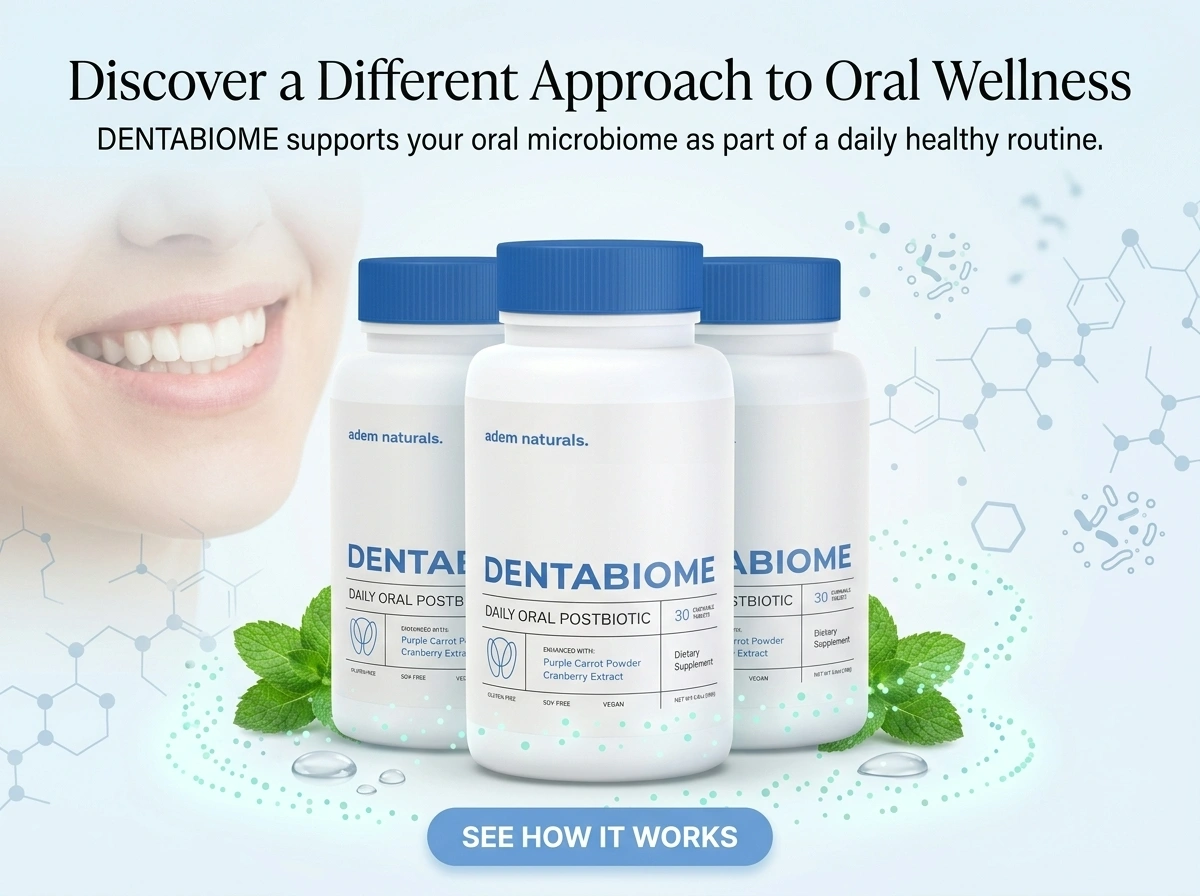
As the world's first oral postbiotic formula, DentaBiome is created to help break the rogue FabM enzyme's "acid-lock" and restore your mouth's natural bacterial balance.
Unlike traditional probiotics, which contain live bacteria that can be fragile and easily washed away by saliva, DentaBiome utilizes stable postbiotics. These beneficial secretions are delivered directly to where they are needed most, boasting a 100% survival rate and zero risk of bacterial overgrowth.
How DentaBiome Works for Sensitive Teeth:
- Breaks the Acid-Lock: It is designed to penetrate the protective shields of destructive bacteria, allowing your saliva to wash away trapped acids.
- Supports Enamel Remineralization: By naturalizing plaque acids and restoring a healthy acid cycle, it helps your teeth absorb the vital minerals they need to rebuild strong enamel.
- Cleanses the Oral Cavity: It helps target and reduce S. mutans by over 99.9%, removing the primary source of acid production.
- Chewable Delivery: DentaBiome comes as a delicious Berry Frost chewable tablet. Chewing floods your entire mouth with saliva, carrying the powerful postbiotics directly to every tooth surface, gum line, and hard-to-reach crevice.
Pros and Cons of DentaBiome
Pros:
- Easy-to-use, delicious chewable tablet (no water or hard swallowing required).
- 100% stable postbiotics with zero risk of bloating or adverse immune reactions.
- 100% vegan, gluten-free, soy-free, and non-GMO.
- Manufactured in the USA in an FDA-registered, GMP-certified facility.
- Backed by a worry-free, 60-day 100% money-back guarantee.
Cons:
- Only available for purchase online through the official website.
- Requires daily consistency to achieve and maintain optimal results.
---
Summary
Tooth sensitivity is more than just a temporary reaction to hot or cold foods. It is a clear warning sign that your protective enamel is wearing thin or your gums are receding, often driven by a hidden bacterial acid-lock.
By addressing the root causes of this wear—switching to gentle brushing habits, neutralizing harmful acids, and supporting your oral microbiome with advanced postbiotic formulas—you can protect your teeth and enjoy your favorite foods with confidence once again.
---
Frequently Asked Questions
What is the primary cause of tooth sensitivity?
Tooth sensitivity is primarily caused by the exposure of the dentin layer underneath your enamel. This happens when outer enamel wears away due to acid erosion, or when gums recede and expose the sensitive tooth roots.
Can sensitive teeth be cured or repaired?
Yes, in many cases, sensitive teeth can be significantly improved. While lost gum tissue does not grow back naturally, worn enamel can be remineralized and strengthened by neutralizing mouth acids and providing the teeth with essential minerals like calcium and phosphate.
How does a balanced oral microbiome help with sensitivity?
When your oral microbiome is balanced, beneficial bacteria keep acid-producing bacteria under control. This prevents the continuous acid wear on your teeth, allowing your saliva to naturally coat, protect, and remineralize your enamel.
---
References
1. National Institutes of Health (NIH). "Dentin Hypersensitivity: Development and Management." [1]
2. Journal of Clinical Dentistry. "The Role of Saliva and pH Regulation in Enamel Remineralization." [2]
---
Protect Your Smile and Reclaim Comfort with DentaBiome
If you are tired of living with the daily discomfort of sensitive teeth and want to address the root cause of acid wear, it is time to try a smarter approach to oral care.
DentaBiome offers a simple, delicious way to break the bacterial acid-lock, protect your enamel, and keep your mouth feeling fresh and comfortable.
👉 Click Here to Claim Your Supply of DentaBiome with a 60-Day Money-Back Guarantee

Written by Elena Navarro
Elena writes practical nutrition guides inspired by her work with multicultural families, focusing on realistic healthy eating rather than restrictive diets.
More about the author →