Why Do My Gums Bleed Even Though I Brush and Floss Daily?
Why Do My Gums Bleed Even Though I Brush and Floss Daily?
It is a deeply frustrating experience. You brush twice a day, floss diligently, and visit the dentist regularly. Yet, almost every time you spit into the bathroom sink, you see that dreaded flash of pink.
If you are dealing with bleeding gums despite brushing and flossing, you are not alone. Millions of adults, especially those over 40, face this exact challenge. The truth is, standard oral hygiene tools are sometimes not enough to reach the root cause of gum inflammation.
This guide explains why your gums continue to bleed, the early signs of gingivitis to watch out for, and how to stop bleeding gums using both traditional and modern, biological approaches.
---
Key Takeaways for Quick Reading
- Plaque isn't the only enemy: Even diligent brushers can suffer from gum irritation due to microscopic bacterial defenses.
- The 'Acid-Lock' phenomenon: Certain harmful bacteria construct an acidic shield that protects them from your toothbrush and floss.
- Gingivitis is reversible: Caught early, gum irritation can be resolved before it develops into advanced periodontal disease.
- Microbiome balance matters: True gum health requires shifting your mouth's ecosystem from acidic and hostile to neutral and balanced.
---
Table of Contents
1. The Root Causes of Bleeding Gums Despite Brushing
2. Understanding the Early Signs of Gingivitis
3. The Hidden Culprit: The 'FabM Acid-Lock' Shield
4. How to Stop Bleeding Gums: Practical Daily Steps
5. A Modern Breakthrough: Shifting From Probiotics to Postbiotics
6. Introducing DentaBiome: Targeted Gum & Enamel Support
---
 Adult practicing daily oral care routine
---
The Root Causes of Bleeding Gums Despite Brushing
Many people believe that bleeding gums are simply a sign of poor hygiene. But when you are already brushing and flossing daily, this explanation falls short. Here is what is actually happening beneath the surface.
1. Localized Inflammation
Sometimes, plaque and bacteria gather in hard-to-reach pockets of the mouth. If you notice swelling or bleeding in just one area, you might need to look at specialized care. Learning how to treat swollen gums around one tooth successfully can help you address these isolated pockets before they spread.
2. Aggressive Brushing Habits
More force does not equal cleaner teeth. Using a medium or hard-bristled toothbrush, or scrubbing your teeth too vigorously, can physically wear down your delicate gum tissue. This mechanical irritation leads directly to bleeding gums and flossing discomfort.
3. Hormonal Shifts and Age-Related Changes
As we age, our gum tissue naturally becomes thinner and more sensitive. Hormonal changes, nutritional shifts, and medications that cause dry mouth can reduce your saliva production. Saliva is your mouth's natural defense mechanism; without it, bacteria thrive, and gums inflame easily.
4. An Imbalanced Oral Microbiome
Your mouth is home to billions of bacteria. When the harmful strains outweigh the beneficial ones, they produce acidic byproducts that irritate the gums. If you also notice a persistent bad taste or odor alongside bleeding, you might want to investigate the bad breath gum disease link to see if your body is warning you of a deeper microbiome imbalance.
---
Understanding the Early Signs of Gingivitis
Gingivitis is the earliest stage of gum disease. It is an inflammatory response to bacterial plaque accumulating along the gumline. Because it is often painless, many adults ignore the early warning signs until the damage spreads.
Keep an eye out for these early indicators:
- Red or Purplish Gums: Healthy gums should be a pale, firm pink. Red, dusky, or dark pink gums indicate active inflammation.
- Puffy or Swollen Tissue: Inflamed gums swell and lose their tight grip around the base of your teeth.
- Bleeding During Brushing or Flossing: This is the most common sign. Healthy gums do not bleed under normal brushing pressure.
- Tenderness: Your gums may feel sensitive or sore to the touch, especially when consuming hot or cold foods.
If left unaddressed, gingivitis can progress to periodontitis, which can damage the bone supporting your teeth.
---
The Hidden Culprit: The 'FabM Acid-Lock' Shield
Why does plaque still accumulate even when you brush and floss?
Modern research shows that certain destructive bacteria, particularly Streptococcus mutans, produce an enzyme known as FabM. This enzyme allows the bacteria to survive in highly acidic environments. Even worse, it helps them build a protective, acidic 'hazmat suit' or 'acid-lock' over themselves.
This acid-lock acts like a shield, protecting the bacteria from the mechanical action of your toothbrush, floss, and traditional mouthwashes. Behind this shield, the bacteria continuously secrete acids that irritate the gums and dissolve protective tooth enamel.
To truly stop bleeding gums, you must break this acid-lock and restore a healthy mouth pH. Without balancing this pH, your gums will remain in a constant state of defense.
---
How to Stop Bleeding Gums: Practical Daily Steps
Transitioning from bleeding gums to a healthy, pink smile requires a combination of proper mechanics and biological support.
| Action Step | Why It Helps | How to Implement |
|---|---|---|
| Switch to Soft Bristles | Prevents physical wear and tear on sensitive gum tissue. | Buy a high-quality extra-soft toothbrush and replace it every 3 months. |
| Gentle Flossing Technique | Cleans the tight spaces between teeth without cutting into the gums. | Curve the floss into a 'C' shape around each tooth rather than snapping it down. |
| Stay Hydrated | Keeps saliva flowing, which naturally washes away harmful acids. | Drink water consistently throughout the day, especially after eating. |
| Support Your Microbiome | Shifts your mouth away from acidic, bad-bacteria dominance. | Use targeted oral postbiotics instead of harsh, alcohol-based mouthwashes. |
---
A Modern Breakthrough: Shifting From Probiotics to Postbiotics
Many health-conscious individuals try to fix their oral health using traditional probiotics. While live probiotics can be helpful, they face major hurdles in the mouth. Saliva contains powerful enzymes designed to destroy foreign live bacteria, meaning most probiotics do not survive long enough to settle and work.
This is where postbiotics come in.
Postbiotics are the beneficial, active compounds and secretions produced by healthy bacteria. Because they are not alive, they do not need to struggle to survive. They are 100% stable, completely unaffected by temperature, and deliver immediate support directly to your gumline and teeth.
---
Introducing DentaBiome: Targeted Gum & Enamel Support
If you are searching for a simple, natural way to break the bacterial acid-lock and support your gums, DentaBiome is designed to help.
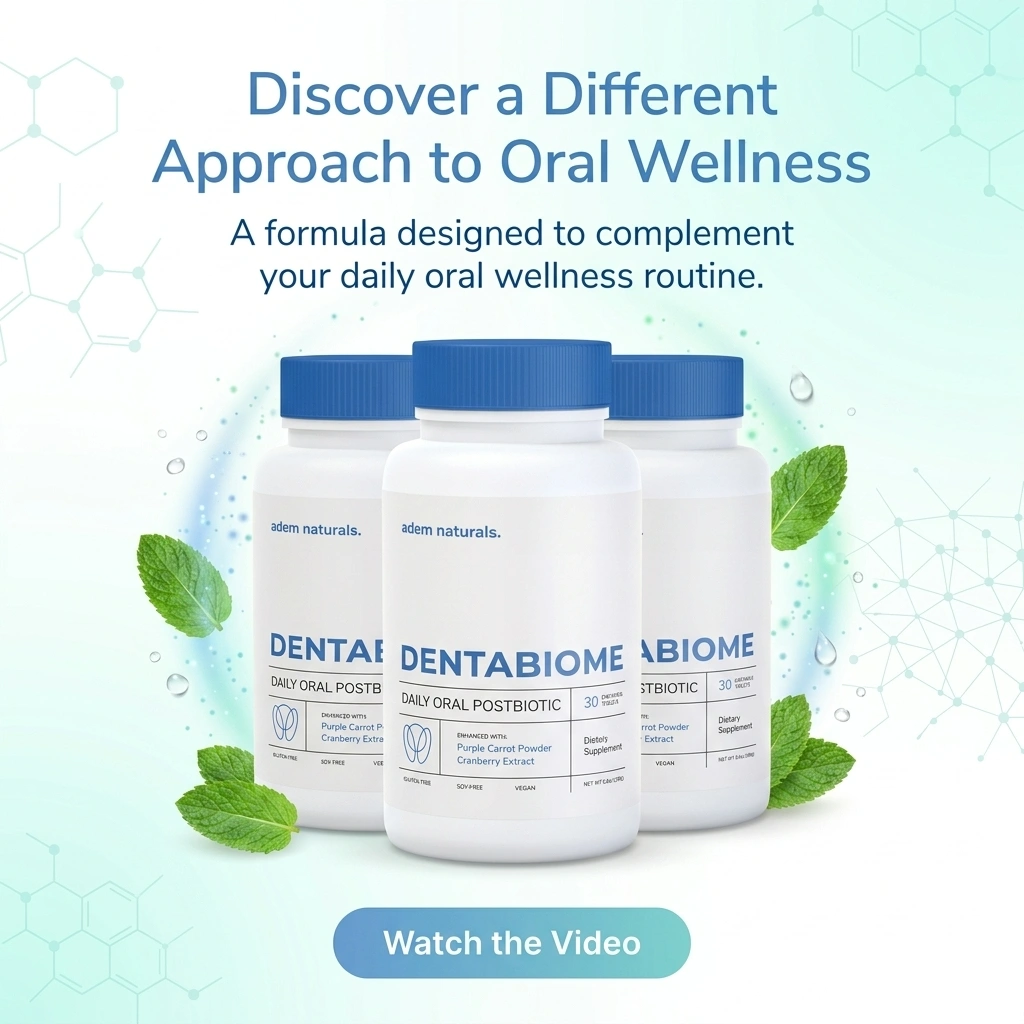
DentaBiome is an innovative oral postbiotic formula engineered to restore your mouth's natural bacterial balance. It comes in a convenient, delicious Berry Frost chewable tablet. As you chew it, the tablet floods your mouth with active postbiotic compounds, carrying them directly into the hard-to-reach crevices where traditional brushing cannot reach.
How DentaBiome Works:
- Breaks the Acid-Lock: Designed to target the FabM enzyme, helping to neutralize plaque acids and support natural enamel remineralization.
- Promotes Bacterial Balance: Delivers healthy secretions directly to the oral tissues with zero risk of live bacterial overgrowth.
- Convenient and Stable: A 100% stable, vegan, non-GMO formula manufactured in the USA in an FDA-registered and GMP-certified facility.
Pros and Cons of DentaBiome
Pros:
- No water or large pills to swallow; simply chew or let it dissolve.
- Uses heat-stable postbiotics that bypass the survival issues of live probiotics.
- Free from gluten, soy, and dairy; 100% vegan-friendly.
- Backed by an ironclad, 60-day 100% money-back guarantee.
Cons:
- Only available for purchase online through the official website.
- Stock can occasionally run low due to ingredient sourcing standards.
If you want to move beyond basic brushing and support your gums at the biological level, consider giving your oral microbiome the help it needs.
➤ Learn More About How DentaBiome Can Support Your Oral Health Today
---
Frequently Asked Questions
Why do my gums bleed when I floss but not when I brush?
Floss reaches deeper into the gingival sulcus—the tight space between your teeth and gums. If bacteria are hidden there, they cause localized inflammation. When the floss physical touches this inflamed tissue, it easily bleeds. This is a clear sign of early gingivitis.
Can vitamin deficiencies cause bleeding gums?
Yes. Severe deficiencies in Vitamin C (traditionally known as scurvy) and Vitamin K can impact your body's ability to heal and clot blood. Eating a balanced diet rich in leafy greens and citrus fruits supports overall gum resilience.
How long does it take for bleeding gums to heal?
With proper, gentle cleaning and biological support to balance your mouth's pH, minor gum irritation and early gingivitis can begin to improve within 1 to 2 weeks. If bleeding persists beyond this time, you should consult your dentist.
Is mouthwash good for bleeding gums?
Most commercial mouthwashes contain harsh alcohol that dries out the mouth. While they kill bad bacteria, they also destroy the beneficial bacteria, leaving your mouth dry and vulnerable. A balanced, non-drying postbiotic approach is often much gentler.
---
Summary & Next Steps
Experiencing bleeding gums despite brushing and flossing is a clear signal from your body that your oral microbiome is out of balance. It is not a sign that you need to scrub harder; rather, it means you need to clean smarter and support your mouth's biological defenses.
By switching to a soft-bristled brush, staying hydrated, and introducing targeted postbiotics like DentaBiome, you can work to neutralize harmful plaque acids, break the bacterial acid-lock, and finally say goodbye to pink in the sink.
---
References
1. American Dental Association (ADA): Understanding Gum Disease and Gingivitis Prevention. [1]
2. National Institutes of Health (NIH): The Role of the Oral Microbiome in Systemic and Dental Health. [2]
3. Journal of Periodontology: Clinical evaluation of postbiotics and beneficial secretions on gingival tissue inflammation. [3]

Written by Marcus
Marcus helps busy families eat healthier without restrictive diets. His evidence-based articles focus on sustainable habits rather than quick fixes.
More about the author →